The results provide a resource to support advocates in making an effective case for R&D, both in the run up to the elections and beyond into the next parliaments.
CaSE thanks our project sponsors for making this work possible, as well as Phil Downing at Icaro for leading the study, along with Jayne Cox at Brook Lyndhurst and the team at YouGov. We would also like to thank the organisations and individuals who participated in workshops to shape the topics explored in this research.
This work was funded by our project sponsors and a grant from Wellcome (318810/Z/24/Z).

Download the full report
DownloadForeword

Florence Young
Senior Public Opinion and Policy Officer, CaSE

Rebecca Hill
Public Opinion and Involvement Manager, CaSE
Elections offer advocates a unique opportunity to make a refreshed case for research and development (R&D) and widen its pool of political supporters. This May’s elections in Scotland and Wales are no different. To do so effectively, we must understand what resonates with the voter base in these nations and use this knowledge to shape our advocacy.

Campaign for Science and Engineering (CaSE) explores public attitudes to R&D not only to gather evidence, but also to turn these insights into practical tools that support the sector’s advocacy.
This year, we are focusing on the elections in the Senedd and Holyrood. They come amid a shifting political landscape. With changes to the electoral system in Wales, and a rapidly evolving and increasingly polarised voter base across both nations, we can expect many new faces in Holyrood and the Senedd come summer.
The R&D community needs to proactively engage with candidates and elected parliamentarians in the Senedd and Holyrood, to build awareness of, and support for, Scottish and Welsh R&D. We can do this more effectively if we first understand how people in the nations – their voters and constituents – think and feel about R&D.
CaSE’s new study, Public Attitudes to R&D in Scotland and Wales 2026 – made possible by the support of our project sponsors and Wellcome – provides insights at unprecedented depth. The results offer a fascinating and granular view on how people view R&D as a political and societal issue in the two nations, giving advocates a valuable resource both now and for years to come.
When it comes to R&D, there is strong support in general terms, but many don’t feel a personal connection with R&D and are uncertain about its benefits or the work that R&D organisations do. We can and must do more to show the public how R&D is tackling the issues they care about.
It may offer reassurance to advocates that support for R&D can be found among voters across the political spectrum. However, priorities begin to diverge around certain R&D topics – with implications for how the R&D community should tailor our messages for different audiences.
Looking ahead to the new Senedd and Scottish Parliaments, it is positive to see the public express clear appetite for more information on R&D and for their elected representatives to become champions for R&D both locally and nationally. New statistical modelling of attitudes at the constituency level demonstrates that such support is broadly consistent across constituencies.
We must build on this appetite. Our community should not be afraid to speak up for R&D in Scotland and Wales, and we must encourage elected representatives to do the same.
We have a positive story to tell politicians: there is much support for R&D, and these results suggest there is little political risk in advocating for it.
We also have data to support engagement at the local level. CaSE is providing all parliamentary candidates with bespoke insights about the public’s – and their constituents’ – views, urging them to start conversations in their communities and engage with local R&D organisations.
We hope this tailored engagement will help forge new connections and nurture a new set of champions for R&D in Holyrood and the Senedd. CaSE urges you to join us in putting these insights into action and advocating for R&D in Scotland and Wales.
Results summaries for Scotland and Wales
To support R&D advocates in Scotland and Wales, we have produced separate summaries of the main findings from the research for each nation. A summary that compares these key results between the nations can be found on this page.
Wales
Scotland
Related resources
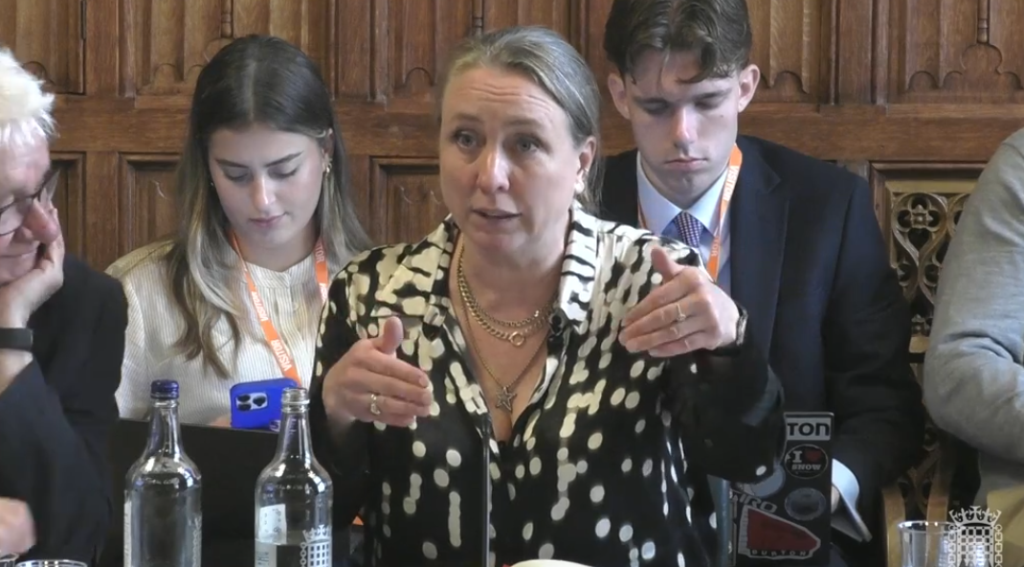

CaSE evidence to the Commons Science and Technology Select Committee
01 October 2026
On September 15th CaSE Executive Director Alicia Greated gave evidence to the House of Commons Science and Technology Committee on the recent machinery of government changes.

R&D in a shifting voter landscape
27 August 2026
This report explores how changes in the UK’s political landscape could impact R&D.
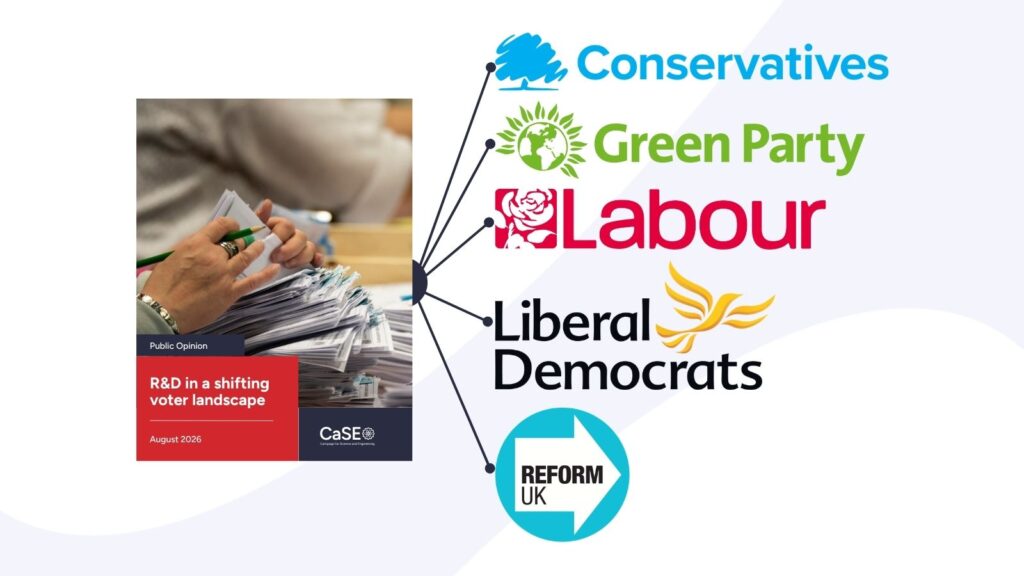
R&D in a shifting voter landscape: Voter group analysis
27 August 2026
This briefing series summarises attitudes within each of the five main UK voter groups and offers advice on how to better engage with them about R&D.

Burnham Government statement on increased English devolution
06 August 2026
CaSE looks at the devolution plans and what they might mean for UK R&D.