
Daniel Rathbone
Deputy Executive Director

Rebecca Hill
Public Opinion and Involvement Manager
The process
Keir Starmer last week announced his resignation as leader of the Labour Party, with nominations for his successor closing on 16th July. Once his successor as leader is announced, he will resign as prime minister, and the new leader will take over.
Newly minted Makerfield MP Andy Burnham is the favourite, with most challengers ruling themselves out and it is looking unlikely anyone will secure the nominations to challenge him. His resounding success in the byelection – with 55% of the votes, he almost doubled Labour’s majority in the constituency – has convinced many in Labour that he is the answer to the party’s falling popularity.
What policies can we expect?
Born in Aintree, Liverpool, Burnham would be the first prime minister from Northern England since Harold Wilson. More than 60 years after Wilson’s ‘white heat of technology’ speech – a call for Labour to harness science to modernise British industry and drive economic progress – what will Burnham’s approach to research policy be?
Burnham spent nine years as mayor of Greater Manchester, which may prove to be the strongest predictor of his priorities alongside his economic model of “Manchesterism”.
He has described “Manchesterism” as a “a modern and functional response to the high-inequality, low-growth trap that came from the 1980s drive to over-centralise political power in the Treasury and privatise economic power”.
In a speech on 29th June, Burnham emphasised his belief that the UK is too centralised, saying that a Government led by him would see the “biggest rebalancing [the] country has ever seen” between central and local government, leading to a “more streamlined state”. This indicates a power shift away from Whitehall, with stronger local partnerships sought out to drive growth.
“Growth cannot be ordered from the top down…it can only be nurtured from the bottom up,” Burnham said, adding that this comes from “placing our universities at the heart of local economies, as all our mayors do, bringing the innovation led approach through start-ups and scale-ups.”
Burnham added that his reindustrialisation policy would “back our scientists, technologists, entrepreneurs and creatives”, to “show how Britain will be the innovation nation of the next decade”.
The creation of innovation cluster Atom Valley during Burnham’s time as Greater Manchester mayor suggests a real recognition of the power of research and innovation to drive economic growth, job creation and regional collaboration. Atom Valley aims to translate the scientific success of graphene into real-world economic and job benefits across the north-eastern boroughs of Bury, Oldham and Rochdale, some of the most deprived parts of the UK.
Similarly, Burnham used his speech to highlight the Cambridge-Manchester partnership on life sciences as a model for rest of country as a way of supporting complementary clusters in different places.
What the policy positions presented in his speech mean in practice – especially for the varied R&D sector – remain to be seen. This will depend on what happens when it comes up against the reality of governing, and on how Manchesterism is applied on a national level. Manchester is a well-established, large economy with a strong identity and, for our sector, excellence in research and innovation going back hundreds of years. Not all places in the UK can claim this.
What is clear, however, is that Burnham has a distinct philosophy and vision of what he wants to achieve, and how to get there.
What does this mean for our sector?
A focus on place-based innovation clearly offers an opportunity for an R&D sector that has long recognised the power of place to drive growth and connect with communities. To make the most of this, as the Atom Valley example shows, our sector must demonstrate relevance to the inclusive growth agenda; emphasising sustained, strategic collaboration and delivery of benefits to broad communities.
At the same time, Burnham’s drive for greater devolution may affect existing structures for R&D funding and support, and the sector will need to be alive to the risks posed by fragmentation of the system.
And there will be changes faced in the higher education sector, which Burnham made clear in his speech. “People have argued over many years for an education system based on parity between academic and technical – and that is what we will build,” he said. We can predict further shift from a university-centric model, with greater emphasis on universities’ roles as local anchors and civic institutions.
Andy Burnham’s career
Burnham’s political career began when he was elected as MP for Leigh in 2001, after which he held various government roles under New Labour. After six years in opposition from 2010, bookended by two failed Labour leadership bids, he left Westminster after being elected as mayor of Greater Manchester in 2017. During this time, Burnham’s campaigning for the former industrial powerhouses of England, especially during the coronavirus pandemic, won him the moniker “king of the north”.
Career timeline
2001
Elected as MP for Leigh
2007-8
Chief secretary to the Treasury
2008-9
Secretary of state for culture, media and sport
2009-10
Secretary of state for health
2010
Labour leadership bid (came fourth)
2010-16
Shadow government roles, including education, health and home
2015
Labour leadership bid (came second to Jeremy Corbyn)
2017-26
Mayor of Greater Manchester
2026
Elected as MP for Makerfield
CaSE’s position and priorities
How the sector responds to the changes a new Government will bring will be crucial. CaSE will be at the forefront of this. We have long advocated for investment in regional R&D, arguing that this should be a fundamental part of the UK government’s approach to drive growth. It is important that all regions of the UK are empowered to develop thriving R&D and innovation ecosystems. At the same time, it is important that the UK Government, devolved Governments and local authorities work together to improve national coordination between local and national R&D priorities. To maximise the regional economic impact of R&D, we need an environment that is collaborative rather than competitive between regions – this is where the Cambridge/Manchester model could come in.
Our public opinion research shows strong interest and support for regional R&D:
- 70% want to hear more from researchers about local R&D
- 69% think it should be a priority for Government to ensure that R&D activity is spread evenly across the UK
- 68% agree the public should be more involved in making decisions about what types of R&D are funded in their region
We have worked extensively with stakeholders in Greater Manchester and used the city region as one of three areas to explore how R&D could form part of an area’s identity (read about this in our 2024 report, People and Place: Putting R&D on the map).
This has laid the foundations for a larger place-based programme at CaSE, bringing together evidence of public attitudes, strong policy insights and the expertise of CaSE members and the wider sector, to put the public at the heart of discussions that will now form an even larger part of political debate. CaSE’s extensive policy work on the ‘place agenda’ will leave us well placed to influence a new Government with this at the core of its agenda for the UK.
Related resources
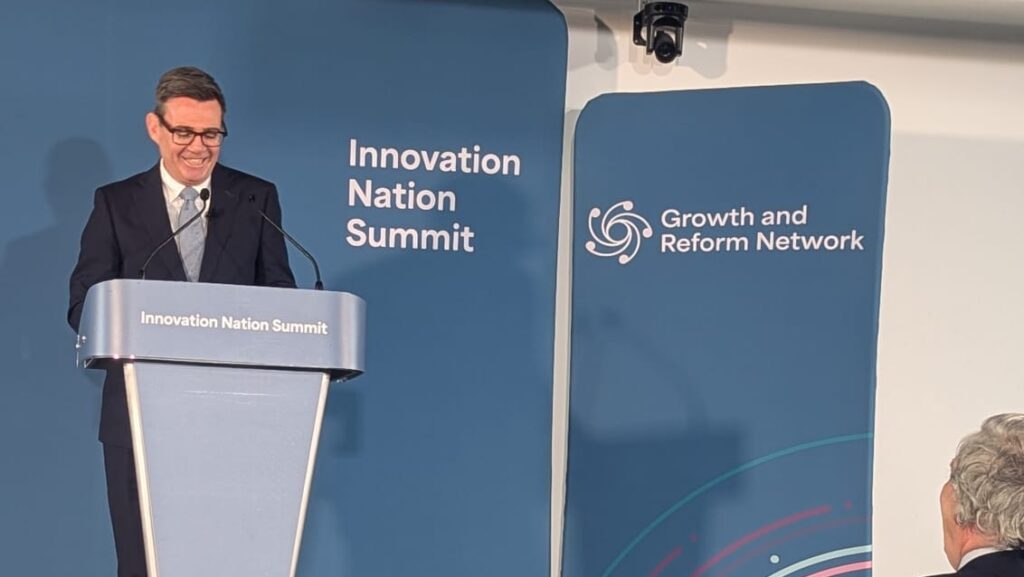

Andy Burnham wants to make the UK an ‘innovation nation’
09 October 2026
Policy Manager Camilla d’Angelo takes a look at Andy Burnham’s speech on making the UK an ‘innovation nation’ and what this means for R&D.
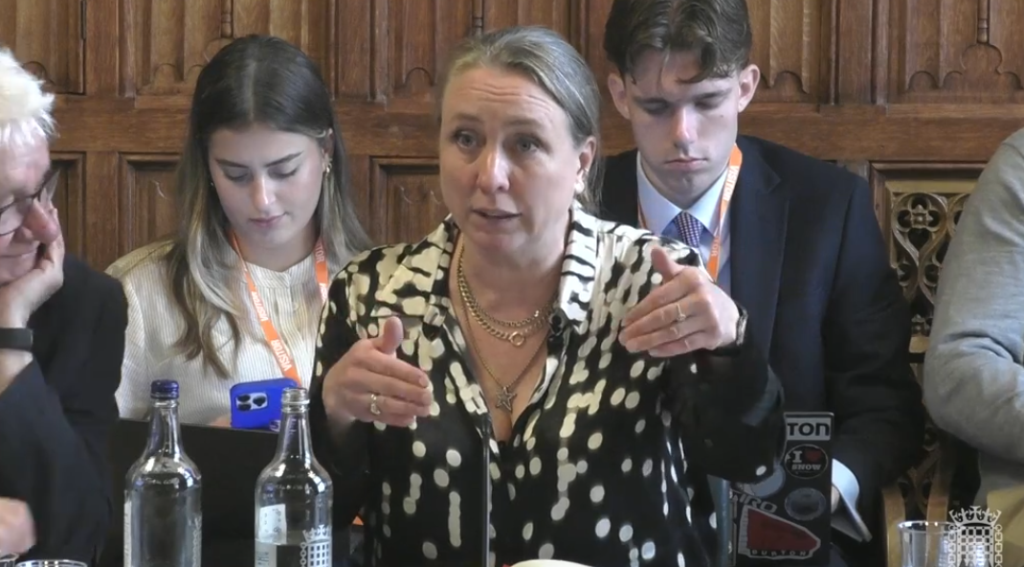

CaSE evidence to the Commons Science and Technology Select Committee
01 October 2026
On September 15th CaSE Executive Director Alicia Greated gave evidence to the House of Commons Science and Technology Committee on the recent machinery of government changes.


R&D in a shifting voter landscape
27 August 2026
This report explores how changes in the UK’s political landscape could impact R&D.
R&D in a shifting voter landscape: Voter group analysis
27 August 2026
This briefing series summarises attitudes within each of the five main UK voter groups and offers advice on how to better engage with them about R&D.