
Rebecca Hill
Public Opinion and Involvement Manager
The move towards increased devolution in England was a widely predicted priority of Andy Burnham’s tenure as prime minister.
Rewiring the State, released on 31 July, outlines a new framework for devolution, with more detail of the plans and implementation timetable to be set out in white paper alongside the Budget on 28 October.
The Government’s stated ambition is to “drive growth, improve public services and give communities greater control over their future”. The Government’s principle will be “devolving by default” – rather than delegating powers – which means central government must become “smaller and more strategic”.
Throughout, there is a strong emphasis on public participation and democratic engagement, and to consider “how we can more actively bring the public into the policy-making process”.
The Government sets out plans for every area in England to have a strategic authority by the end of 2028. Although the Government will not impose mayors on areas, those with mayors will have greater powers available to them. A blueprint for the capacity and capabilities strategic authorities need, and a strategy for delivering that, will also be developed.
How does this relate to R&D?
Local leaders are promised greater power and control over local transport, housing, local energy, cultural investment and – of most relevance to the R&D sector – innovation.
“We will support mayors to foster local innovation ecosystems, devolving a substantially increased share of later-stage innovation funding to local leaders so they can back opportunities with the greatest potential for local growth,” the document says. The Government has also committed to “support local places to reindustrialise by building on frontier sector and cluster strengths”.
It isn’t yet clear how increased devolution will affect existing place-based R&D initiatives from the previous government. The 2024 English devolution white paper set out plans for local innovation ecosystems, and UKRI’s latest strategy – published just two weeks ago – promised a refreshed Place Funding Policy and continuation of the Local Innovation Partnership Fund.
CaSE will continue to engage with the Government and UKRI, local and mayoral authorities, and our members and the wider R&D community to understand the potential impact of the newly announced changes on the R&D sector across both England and the rest of the UK.
We will scrutinise the Government’s plans to understand how devolved innovation funding will work in practice, and how priorities at different levels of government will align. We will also seek clarity on what impact this will have on R&D in areas that do not, or choose not to, have mayors, in both the short and long term.
Meanwhile, we are continuing our programme of work on place-based R&D, which brings together our policy expertise and public opinion research to support the sector’s approach to devolution, and ensure the public are put at the heart of these discussions.
This will build on CaSE’s strong regional connections and previous work, including our 2025 briefing on how R&D can drive growth across the UK, and our 2024 report People and Places that explored the use of place as a framing to strengthen connections between the R&D system and the public.
If you’d like updates on this programme as it develops, sign up to CaSE’s newsletter.

What does the new Government mean for R&D?
In this analysis piece, CaSE takes a look at what changes to the machinery of government might mean for R&D.
Related resources
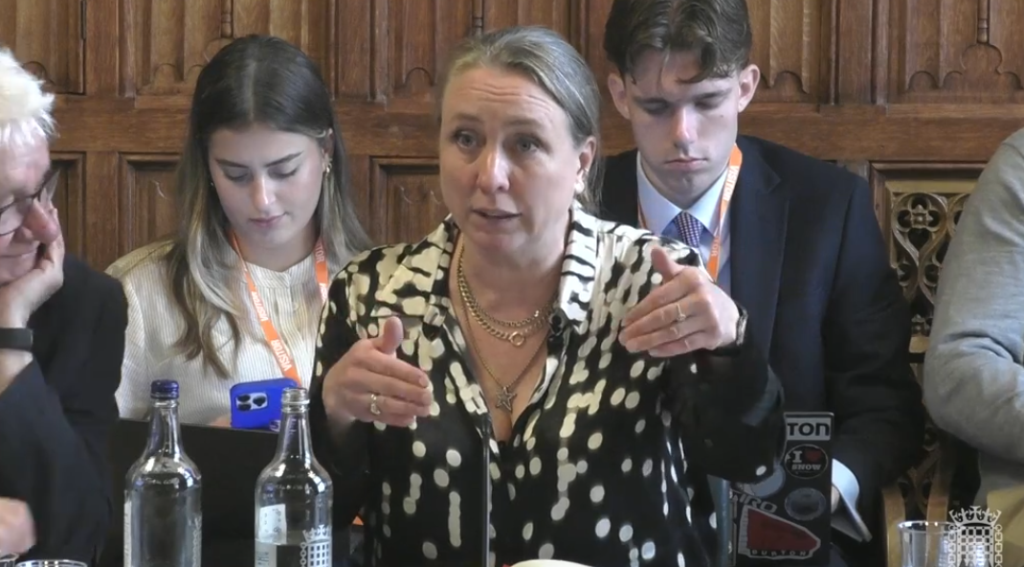

CaSE evidence to the Commons Science and Technology Select Committee
01 October 2026
On September 15th CaSE Executive Director Alicia Greated gave evidence to the House of Commons Science and Technology Committee on the recent machinery of government changes.


R&D in a shifting voter landscape
27 August 2026
This report explores how changes in the UK’s political landscape could impact R&D.
R&D in a shifting voter landscape: Voter group analysis
27 August 2026
This briefing series summarises attitudes within each of the five main UK voter groups and offers advice on how to better engage with them about R&D.


CaSE letter to Chris McDonald MP
11 August 2026
CaSE wrote to Chris McDonald in the new role of Minister of State Science, Innovation and Investment.