
Florence Young
Senior Public Opinion and Policy Officer
There were lots of positive messages on innovation throughout the speech, with the Chancellor setting out the Government’s ambitions to back innovative businesses and entrepreneurs, and further announcements on both innovation and research and development (R&D) in the Budget documents.
Below we look at the measures that will impact UK R&D and dig into the detail of the reallocation of capital budgets across departments for the Defence Investment Plan (DIP), highlighting the risk this could pose to departmental R&D investment.

CaSE's initial response
Read moreAn innovation-focused Budget
The Budget demonstrates a clear shift in focus and rhetoric from the new Government, moving away from previous administrations’ focus across R&D towards a much stronger pro-innovation and business R&D sentiment. This is perhaps unsurprising given that science has been brought into the Business department by the Prime Minister.
The Chancellor repeatedly referred positively to innovation, including in his opening lines that “backing the enterprise of British business to unleash innovation and growth in every postcode” is one of three immediate actions being taken in this Budget. Innovation and R&D both feature heavily in the corresponding documents (mentioned 65 and 19 times, respectively) with a host of measures announced across several policy areas, which are explored in more detail below.
However, unlike in last year’s Budget, there is no mention of curiosity-driven R&D in this year’s (or any other alternative phrasings such as discovery-led, fundamental, or basic research), nor is there any mention of quality-related (QR) funding for universities.
While, this lack of visibility is perhaps unsurprising in the wider context of this Budget, it is important that the Government does not lose sight of the vital underpinning role of the UK’s discovery R&D capabilities within the innovation system. We also know that the UK public want to see an equal balance of discovery and applied research. CaSE’s 2025 public opinion research found that half of people favoured an even mix of fundamental and applied research.
CaSE has repeatedly raised the importance of protecting curiosity-led R&D budgets and uplifting QR, including in our representation to the Treasury, and is continuing to raise these priorities with the Department for Business, Innovation, Science and Trade (BIST) to ensure that fundamental, curiosity-led R&D remains a departmental priority.
CDEL reallocation for the Defence Investment Plan (DIP)
The Autumn Budget includes an announcement of further reallocation of capital spending across government departments to meet the costs of the defence investment plan (DIP), which CaSE cautioned in our initial response could put departmental R&D investment levels at risk.
In the Budget, the Chancellor restated plans for the UK to meet its NATO commitment of spending 3.5% of GDP on defence by 2035, with an interim target of 3% of GDP by 2030.
To fund this increase, in June, the Government announced that all departments would face a 1% ‘haircut’ to their capital departmental expenditure limit (CDEL) each year to fund the new DIP. Departmental R&D budgets, including the budget for UKRI within BIST, all fall under CDEL budget lines and it has been confirmed that the reallocation of this capital spending cannot be made internally within departments, for example by BIST redirecting existing departmental R&D budget from other disciplines into defence R&D.
This Budget provides further financial detail on the DIP, including announcements that further reductions to CDEL must be made on top of those announced in June. An additional 1p per £1 of savings will need to be found in capital spending of each department from 2027-28 to 2029-30.
In the ‘Investing in our National Security’ section of Table 6.1 in the Budget documents, row 41 details the additional amount of capital budget that will be reallocated from across all departments to fully fund the DIP. These reallocation figures are reproduced below, alongside the total CDEL for each year as set out in the Budget in Table B.2. It is clear from the figures that these savings will not be distributed evenly across the years 2027-28 to 2029-30, but how this additional 1% cut stacks with the previously announced 1% ‘haircut’ for those years remains to be clarified.
CaSE recognises the importance of funding defence and appreciates that the Government is choosing to spread the cost of cuts across all departments. However, with departments having to make these savings in their capital expenditure budgets, R&D may end up being disproportionately targeted.
Departments are being asked to focus ‘on finding efficiencies, cancelling or delaying lower priority programmes and remaining ruthlessly focussed on value for money for the taxpayer’. Whilst each department’s capital budget has a different make up, there is a risk research budgets across the board are seen as more expendable when put up against major infrastructure and other procurement costs. This has happened in the past when departments have been asked to make savings, and for many departments the R&D budget is less than 1% of total capital budgets.
Within BIST, R&D budgets make up a large proportions of capital expenditure and, while savings will not doubt be accommodated to fund this national priority, these additional cuts come in the context of many other pressures on the R&D budget, meaning difficult decisions will need to be made within BIST and UKRI, and CaSE will be engaging closely as these conversations unfold.
CaSE will be seeking further clarity on the DIP capital reallocation process and calling for the Government to provide oversight and further guidance to departments. This is needed to mitigate the risk of cuts to R&D budgets, in aggregate, ending up deeper than 1% in 2026-27 and 2% in the years between 2027-28 and 2029-30.
Announcements across other policy areas
International talent
CaSE welcomes the Chancellors ambitions to “ensure the immigration system supports a dynamic labour market and innovative firms” and “deliver the most pro-business migration system in Europe for high-skill workers.” CaSE public opinion research shows that people in the UK think employing international researchers can diversify ideas and culture, improve the UK economy, increase international collaboration and strengthen the quality of UK R&D.
The Budget includes no mention of the international student levy, announced last year and due to go through Parliament soon, but there are several other positive announcements on visas, suggesting an overall shift towards a more positive tone on international talent, compared to previous budgets.
The Budget builds on a previously announced expansion to the Global Talent Visa, allowing R&D-intensive businesses to indorse applicants, announcing that UKRI will work with organisations in regions across the UK to identify additional R&D-intensive businesses in Industrial Strategy sectors which could act as host organisations on the endorsed funder pathway of the Global Talent visa route by spring 2027.
The Government will also be expanding the High Potential Individual visa to support applicants with eligible qualifications from the top 150 of the world’s best institutions, with a proportional increase to the cap under the scheme.
It is positive to see that the Government will also be reversing a previously announced reduction to the duration of the Graduate visa, increasing this back to two years for graduates from “high compliance universities where there are strong labour market outcomes”. CaSE understands that the full criteria for these qualifiers remain to be defined and will under discussion in the coming weeks.
R&D investment in places
The Budget includes a suite of new R&D investment announcements, many of which are presented with a strong emphasis on place and existing regional innovation clusters.
CaSE welcomes the announcement of the No10 North Priority Projects Programme that will join up agencies across government, business and academia and align plans with wider action on the infrastructure, skills, and investment. CaSE would like to see this go further when it comes to R&D and include the public as a vital stakeholder in devolved decision making. CaSE will be exploring how strategic authorities can meaningfully engage the public in the discussions about devolution of innovation and R&D.
The Budget reiterates how UKRI is promoting innovation across the UK by focusing £1 billion of investment over the next four years into priority innovation clusters aligned with existing Industrial Strategy clusters, and by devolving Local Innovation Partnerships Funds from 2028, as set out in the Prime Minister’s Innovation Nation speech.
In line with this increasing focus on place and English devolution, the Government has published a paper alongside the Budget: Supporting local investment: An offer to places. This paper sets out how several investment bodies and public funding institutions will work with places to deliver their investment priorities, including sections from Innovate UK and the British Business Bank.
The Budget itself announces several new UKRI investments in existing science and innovation clusters including:
- £424 million to transform the John Innes Centre and the Sainsbury Laboratory at Norwich Research Park.
- Over £85 million to transform the Offshore Renewable Energy Catapult’s facilities in Blyth.
- Over £75 million into the CoSTAR network of state-of-the-art labs anchored in Yorkshire, Dundee, Belfast, Buckinghamshire and Surrey.
New public-private partnerships on R&D have also been announced in the Budget, such as:
- Three new public-private investments in life sciences, totalling over £1 billion and backed by almost £70 million in grant funding (with Convatec in Manchester, Vertex Pharmaceuticals in Oxford, Kindeva in Loughborough).
- A multi-decade cooperation agreement with Rolls-Royce starting with co-investment in a joint, 10-year, £2.5-billion programme for next-generation gas turbine technologies for civil and defence aerospace, involving Derby, the Midlands and Bristol.
There is also welcome recognition in the Budget of R&D investments in Scotland, Wales and Northern Ireland and their contribution to economic growth. The Budget acknowledges many areas of R&D strength across the nations, and announces several new investments including:
- £18 million new funding for a UK Advanced Chip Design Academy led by the University of Edinburgh.
- £2.5 million to expand the M-SParc science park in Anglesey, North Wales, (subject to business case).
- £7.5 million of new R&D investment for Queen’s University Belfast’s Centre for Secure Information Technologies (CSIT) Cyber AI Hub.
It is positive to see announcements of additional investment in these R&D organisations and programmes, many of which featured in the portfolios of R&D case studies CaSE gathered and shared with parliamentarians as part of our work around the recent Senedd and Holyrood elections in 2026 and the UK General Election in 2024.
Universities
Universities are mentioned positively in several places throughout the Budget in relation to regional partnerships and driving growth, and the Chancellor noted the UK’s “top ranking universities” in his speech.
The Budget also highlights that UKRI is supporting university partnerships and promoting research commercialisation through its £19.75 million Collaboration for a Sustainable Future Programme and through £16 million of proof-of-concept funding.
However, there is notably no mention of the financial pressures facing the sector nor any fiscal measures announced to help address this. CaSE has repeatedly emphasised to Government that universities can only deliver the vital role they play in local economies and partnerships if they are on a financially sustainable footing.
Public procurement
The Budget states that procurement will also be used to support innovative and scaling companies. Building on last year’s announcement of departmental Procurement Innovation Champions, the Government has announced that an external Chair will be appointed to the Department for Business, Innovation, Science and Trade (BIST)’s Commercial Innovation Hub (CIH), who will work alongside these Champions, to support departments to procure innovative solutions. CaSE welcomes this announcement, which aligns with our recommendation in our Backing Business R&D report, that strong leadership is required to promote cultural change and use public procurement to establish and strengthen markets for new technologies.
Alongside this, several specific schemes were announced including:
- An additional £80 million will support the existing Sovereign AI’s challenge-led R&D Procurement Scheme, which will back innovative AI companies to develop solutions across areas such as healthcare, AI security, and warfare.
- Building on a £1 billion commitment earlier this year to procure large-scale quantum computers, with a quantum sensing and PNT Procurement Catalyst backed by a further £138 million from the Department for Business, Innovation, Science and Trade (BIST) and the Ministry of Defence (MoD).
Business R&D
Several welcome measures were announced to support business R&D, including:
- Simplifying R&D tax relief administration by removing the Claim Notification Form (April 2027) and simplifying the Additional Information Form (autumn 2027).
- Improving Government venture capital schemes through technical changes that will increase efficiency and reduce administration burden, strengthening guidance and compliance activity on excessive fees, and engaging with stakeholders on improving the Advance Assurance service.
The Chancellor has announced a £5 billion uplift to the British Business Bank’s financial capacity to increase access to finance for innovative start-ups and scale-ups. This will include £1.4 billion to invest in equity funds backing high-growth businesses and £450 million for a new venture debt product providing non-dilutive finance to innovative firms. The budget also separately confirms a new commitment for the National Wealth Fund and British Business Bank to deploy up to £5 billion over the next four years into defence, dual-use and other sectors that support our national security, sovereign capability and resilience.
CaSE welcomes the Government’s commitment in the Budget to work with pension providers, asset managers and the wider industry to accelerate the deployment of capital into innovative, scaling businesses, and support the UK’s scale-up ecosystem through £25 billion of additional investment from the Mansion House Accord. In our Backing Business R&D report, CaSE called for the Government to use the Mansion House reforms, in close collaboration with R&D-led businesses, to unlock pension funds for investment in R&D intensive industries.
Entrepreneurship
The Government has published a prospectus, Entrepreneurship in the UK: Start. Scale. Stay., alongside the autumn Budget and announced several specific measures to support entrepreneurs including:
- Piloting a Young Entrepreneurs Allowance, providing support towards living costs during the first year of their business.
- A pipeline of commitments from the BBB to support finance of women-led businesses and start ups
- A new Founders’ Relief – a 10% capital gains tax relief on up to £10 million in lifetime gains for qualifying founders of high-growth, innovative companies, with a technical consultation launched alongside the Budget on its detailed design. The qualifying conditions have raised some concerns that founders from certain sectors may be disproportionately excluded from this new scheme.
Related resources
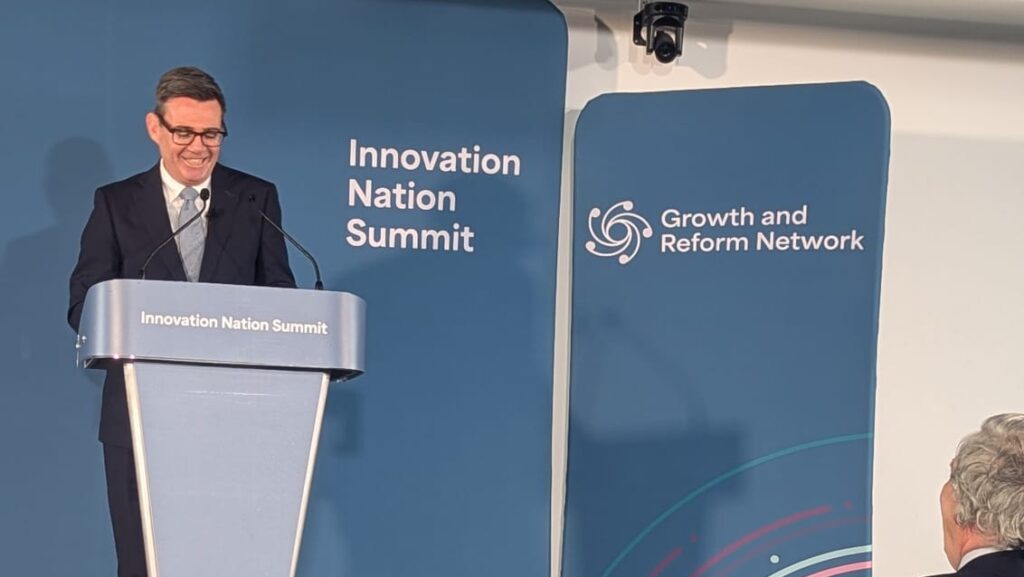

Andy Burnham wants to make the UK an ‘innovation nation’
09 October 2026
Policy Manager Camilla d’Angelo takes a look at Andy Burnham’s speech on making the UK an ‘innovation nation’ and what this means for R&D.

CaSE evidence to the Commons Science and Technology Select Committee
01 October 2026
On September 15th CaSE Executive Director Alicia Greated gave evidence to the House of Commons Science and Technology Committee on the recent machinery of government changes.


R&D in a shifting voter landscape
27 August 2026
This report explores how changes in the UK’s political landscape could impact R&D.
R&D in a shifting voter landscape: Voter group analysis
27 August 2026
This briefing series summarises attitudes within each of the five main UK voter groups and offers advice on how to better engage with them about R&D.