
Camilla d'Angelo
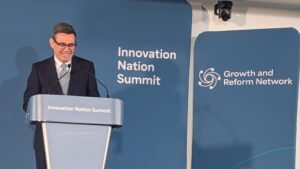
Policy Manager Camilla d’Angelo takes a look at Andy Burnham’s speech on making the UK an ‘innovation nation’ and what this means for R&D.
He went on to outline his ambition of having a globally significant cluster, with globally significant companies, in every region.
Burnham emphasised that the UK starts from a position of strength, highlighting the many leading research and innovation clusters right across the country. Research clusters bring together concentrated networks of talent, institutions and infrastructure to work on specific areas of R&D strength. He cited a range of sectors, including the creative sector, advanced manufacturing, fintech, photonics, clean energy, space, automotive engineering, quantum, cyber, compound semiconductors, and AI. However, he emphasised that the UK can and must do more to capitalise on these strengths.
Underpinning all of this is the opportunity presented by devolution, as the Prime Minister sees it, to make sure that clusters right across the country can be supported to drive growth and innovation.
CaSE's initial response to the speech
Read moreBurnham announced three policy measures the Government is bringing forward to help drive this agenda:
The Local Innovation Partnerships Fund (LPIF) to be devolved to established mayors from 2028.
This brings forward the devolution of the LPIF, a £500 million UK Research and Innovation (UKRI) programme running from 2026 to 2031, originally expected during the next Spending Review period.
UKRI to commit £1bn over the next four years to back clusters and places to drive a more place-based approach to innovation.
This aims to build on the Industrial Strategy and identify clusters around the UK with the potential to become world leading. However, the announcement lacked detail on where this funding will be drawn from and how it will be allocated. It is likely that it will come from existing UKRI budgets, with Buckets 2 and 3 of the R&D allocations used in this way, but this has not been confirmed. CaSE will be looking at this in more detail as soon as possible.
The Government to promote more collaboration between complementary clusters.
Citing the Manchester and Cambridge innovation partnership as an example.
Based on the information available so far, it appears many of these measures build on the government’s previous commitments on innovation devolution. It is welcome to have reconfirmed that regions will be given greater freedom to make decisions about local innovation programmes, something which CaSE has long called for. It is also positive to hear the intention to support greater collaboration – CaSE has previously emphasised the importance of creating a UK environment that is collaborative rather than competitive between regions. This includes supporting collections of places with related strengths to work together and exploring collaborative opportunities to attract investment for a region. However, the announcement at present lacked any detail on how greater collaboration would be achieved.
Universities
Burnham rightly highlighted the vital role of the UK’s world leading universities in driving innovation, emphasising the importance of university-led research as the foundation of this.
It is positive to hear the foundational contribution of universities to the R&D system recognised. However, universities are facing well acknowledged financial pressures and must be supported if they are to continue to deliver on these ambitions. The financial sustainability of the R&D sector is essential to the success of the Industrial Strategy and Burnham’s stated ambition of an innovation-led, research-driven economy. Without a stable funding base, universities and research organisations will struggle to invest in new capabilities and support innovation.
International collaboration
Burnham stated that an ‘international outlook’ would sit at the heart of his approach to innovation, emphasising the importance of innovation clusters being globally competitive. He pointed to the importance of building closer ties with Europe.
CaSE welcomes this emphasis. International collaboration is fundamental to a strong R&D system, and the UK’s ability to work with partners in Europe and beyond is a fundamental part of its attractiveness for research and innovation.
However, the speech did not set out what closer ties with Europe would mean in practice, for example in relation to EU research programmes such as Framework Programme 10 or mobility of talent. CaSE members have also outlined that there is an opportunity for the UK to broaden beyond traditional research alliances and expand its relationships with economies around the world, including emerging economies.
Business
There was a strong focus on businesses. Burnham stressed that the UK needs to be globally competitive for business and acknowledged that too many start-ups are leaving the country.
He outlined a series of policy areas that are being looked at to provide an attractive environment for business and investment:
- Pension investment: Pension capital to be directed into UK businesses, with the aim of increasing the supply of long-term finance for growing companies.
- Public procurement: British public procurement to be made to ‘work harder’ to support reindustrialisation and to retain sovereign manufacturing capability.
- Regulation: Sandboxing powers to be used to help new technologies and business models reach the market more quickly.
- Tax measures: to be used to encourage founders to stay and scale in the UK.
Supporting the environment for business R&D, including for scale-ups, is something that CaSE has previously highlighted, including in our recent conversations about driving better public and private collaboration.
However, many of these measures are not new, and the speech lacked detail. It is not yet clear which tax measures are being considered, how procurement rules would change, or how sandboxes would be designed to protect the public while supporting innovation.
Artificial Intelligence (AI)
Burnham described AI as a foundational technology and linked it to an innovation-led, research-driven economy. He also highlighted the UK’s upcoming G20 presidency as an opportunity to advance an ‘AI for good’ agenda. This would include a global code of standards and principles to safeguard the global economy and guard against the risks AI may pose, while making the most of what he described as a huge opportunity for investment.
The recognition that AI progress depends on strong underlying research is welcome, and the UK’s AI ambitions can only be realised if they are built on sustained investment in the R&D base.
Our recent conversations have also highlighted that regulation is an important part of the innovation system in helping to build public trust and for successful adoption of innovations. Rapid developments in areas such as AI can leave regulatory gaps, which can weaken public trust and can present a risk for research.
What this means for R&D
The speech carried genuine esteem for the R&D sector and an understanding of the important role it has in driving economic growth and improving lives. CaSE will be looking for further detail over the coming weeks, including within the anticipated devolution white paper expected later this year. We will continue to engage and work with the Government to ensure that the whole of the UK’s R&D ecosystem can contribute to making the UK an innovation nation.
Related resources

CaSE evidence to the Commons Science and Technology Select Committee
01 October 2026
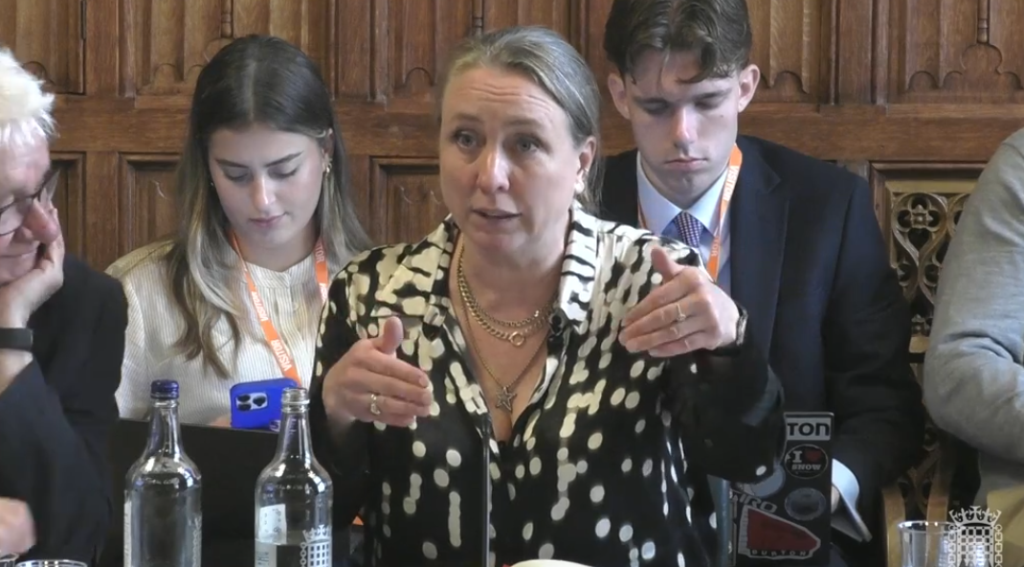
On September 15th CaSE Executive Director Alicia Greated gave evidence to the House of Commons Science and Technology Committee on the recent machinery of government changes.

R&D in a shifting voter landscape
27 August 2026
This report explores how changes in the UK’s political landscape could impact R&D.
R&D in a shifting voter landscape: Voter group analysis
27 August 2026
This briefing series summarises attitudes within each of the five main UK voter groups and offers advice on how to better engage with them about R&D.


CaSE letter to Chris McDonald MP
11 August 2026
CaSE wrote to Chris McDonald in the new role of Minister of State Science, Innovation and Investment.