
Daniel Rathbone
Deputy Executive Director
The STFC’s core budget is flat between 2026-2030. However, the STFC’s costs are forecast to increase significantly in this period. UKRI say this is due to factors including increased energy costs, unfavourable foreign exchange fluctuations, higher staffing costs and an expanded portfolio of activities.
UKRI said that the measures outlined in the programme follow ‘extensive engagement with the research community, with the STFC’s expert advisory bodies, and in consultation with expert staff.’
Main outcomes
- UKRI have said they have decided to prioritise the ‘long term sustainability’ of PPAN disciplines and ‘critical capabilities’ within multidisciplinary facilities and infrastructure.
- Particle Physics, Astronomy and nuclear physics (PPAN) funding will decrease by 2.7% from 25-26 to 29-30
- Multidisciplinary facilities, (Diamond Light Source, ISIS Neutron and Muon Source and Central Laser Facility) will see a budget cut of 15% from 25-26 to 29-30.
- All international subscriptions will be met in full which will see costs increase by 19%.
- National laboratories budget will be cut by 58%, with estates budget increasing by 27% to deal with ‘important legacy issues’
- STFC will look to commercialise assets to increase revenue.
- UKRI will provide ‘transitional funding’ to STFC across the period to avoid immediate sharp cuts.
- The programme will include ‘checkpoints’ in 2027 and 2028. If the programme is not on track to deliver financial sustainability STFC may have to close a multidisciplinary facility.
What does it mean?
It is positive that grant funding to PPAN (particularly for early career researchers) and international subscriptions are broadly protected for the worst of the cuts. However, the substantial cuts to multidisciplinary research facilities and other research infrastructure will likely have a profound negative impact across the research sector. In the long term these cuts are likely to have a much bigger economic and research impact than the level of savings realised in the short term. They could undermine other priorities for UKRI and Government, like AI and Quantum. The Diamond Light Source sets out on their website how the research carried out there supports priorities like AI and Quantum Computing.
Consistent and sustained investment is needed to ensure that the UK can stay at the competitive cutting edge of new technological developments in research infrastructure. For what are relatively small sums in the scale of Government budgets (£28m per year to be saved on operational costs for multidisciplinary facilities) the UK faces losing critical capabilities. It is also unlikely STFC will be investing in new infrastructure for the future. This seems to cut against the Government and UKRI’s priorities in making record investment in R&D and protecting discovery-led research.
The cuts also lay bare how wide the gap between costs and budget has become at the STFC. Even if some of this is about rising energy costs and fluctuations in foreign exchanges rates, there are some serious questions about how this situation was allowed to come about in the first place and whether the STFC has appropriate governance in place.
While many of these decisions are not positive for the sector – it is good to see UKRI setting out in full and with detail about the decisions that have been made, as well as how they have been made. However, its clear that keeping the STFC budget flat across the spending review period was a decision with serious consequences and we haven’t yet had a satisfactory explanation as to why that decision was made.


Related resources
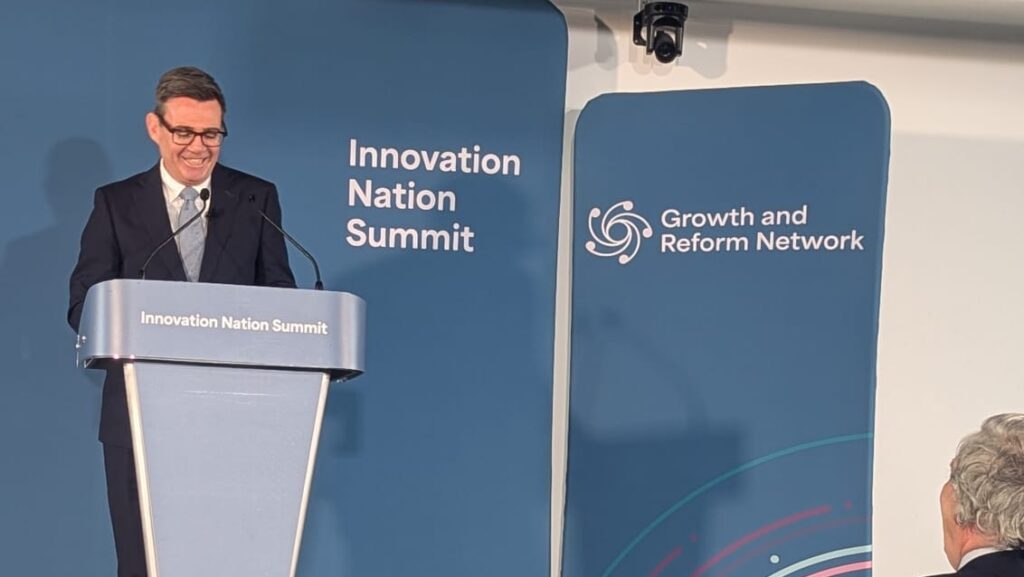

Andy Burnham wants to make the UK an ‘innovation nation’
09 October 2026
Policy Manager Camilla d’Angelo takes a look at Andy Burnham’s speech on making the UK an ‘innovation nation’ and what this means for R&D.

Overall R&D investment increased in cash and real terms in 2024
07 August 2026
The ONS has published the latest figures for gross expenditure on R&D (GERD) in the UK in 2024. CaSE takes a look at what they mean.
Conservative Party plans highlight the shifting political landscape for UK R&D
30 April 2026
Conservative Party have presented a defence policy proposal that includes a reduction of UKRI funding by £2 billion per year. CaSE has looked at this proposal and what it indicates about the wider position of R&D in public policy.


Julia Lopez MP reply to CaSE letter on Conservative defence R&D plans
30 April 2026
CaSE has received a reply to our letter to the Conservative Shadow Secretary of State for Science, Innovation and Technology, Julia Lopez MP, which asked for clarity surrounding their policy position that would see a reduction of UKRI funding by £2 billion per year.